UNIROBOTICS’ Indigenous Business Model Created an RCWS Family in Record Time


UNIROBOTICS developed and produced TARGAN remote-controlled stabilized RCWS in line with the contract it signed with HAVELSAN in October 2021

UNIROBOTICS’ Indigenous Business Model Created an RCWS Family in Record Time
UNIROBOTICS developed and produced TARGAN remote-controlled stabilized RCWS in line with the contract it signed with HAVELSAN in October 2021, and these turrets will be a part of Offshore Patrol Vessels currently under construction for the Turkish Naval Forces. The company made waves with this turret in a very short period of time, thanks to its indigenous business model, surpassing challenges like open and secret embargoes and disruptions in global supply chains to achieve its success. We have touched on this business model that has created new generation RCWSs, for CANiK News readers.
Remote-controlled stabilized weapon stations have special importance for both naval and land-based platforms. These systems transform a machine gun or a cannon into a weapon with high accuracy, powered by an intelligence that utilizes communication and informatics capabilities as well as electro-optical sensors. As such, developing a modern weapon station is a multidisciplinary effort, requiring multilayered efforts in each discipline.
UNIROBOTICS set sail to develop an RCWS to be used in offshore patrol vessels, starting on the hardest path regarding RCWS development, as products for naval platforms need to be operated fully in harmony with the rest of the vessel, as well as requiring special corrosion resistance. In addition, mastery of hardware components like advanced electro-optical sensors for the harmonious operation with the vessel’s combat management and data distribution systems, as well as software components like interfaces for ease of use and algorithms to make the operator’s workflow easier is required. Furthermore, for mechanical design, many criteria must be considered, like radar reflection and infrared signature beyond just the environmental conditions.
Commercial Viability Starts with Full Comprehension of the Technology for UNIROBOTICS
UNIROBOTICS, as a Samsun Yurt Savunma (SYS) subsidiary, started its journey in Türkiye, a country that faces open and secret embargoes as well as the effects of the global pandemic in international trade, took a different and cautious approach so that it could offer the best possible product to HAVELSAN. The company chose to start working with a long analysis and preparation process in the project signed with HAVELSAN to develop the RCWS named TARGAN. UNIROBOTICS wanted to develop all the required technologies in-house during this process and made significant investments in both human capital and infrastructure. The company created expert teams for all the subsystems used in the weapon station.
Expert teams established in fields like mechanical design and production, electronic components to manage and control said mechanic systems, especially motors and controllers, electro-optical systems, printed circuit board designs to ensure smooth operation of all these systems, software to execute in all aforementioned embedded hardware, and all others had to work in parallel. UNIROBOTICS quickly expanded its core team and was able to quickly adapt its growing team to various projects, thanks to its engineering expertise and past work.
The company also started efforts to cooperate with other actors in the Turkish defense and aerospace ecosystem for the sub-systems and components it would require for the design and production processes of TARGAN. Thanks to its collaborators, who are experts in their fields with many projects under their belt, UNIROBOTICS has established an ecosystem that includes many companies that have internalized military standards in various fields, from connectors to wiring, from motors to drivers, from mechanical materials and raw materials to electronic PCB layouts.
UNIROBOTICS Takes a Redundant Progress Approach, From R&D Phase Onwards
After the initial preparation process that established the required infrastructure and brought the required colleagues, UNIROBOTICS took a multi-alternative, safe R&D approach that took a bit more time rather than sprinting to the prototyping phase as fast as possible. The company chose to develop multiple systems for the same niche, for both its designs and the services and products procured from its subcontractors.
This approach was chosen because of the embargoes on Türkiye, the disruptions to the global supply chain, and chip shortages. Even though this approach prolonged the time required for the internal functional tests and certain verification processes, it was proven to be the correct approach over time.
UNIROBOTICS made its procurement and stock management a part of this costly but reliable process. The company did not back down from risks for the procurement of all the components and subsystems it had the potential to use and ordered high amounts of products from different brands and different suppliers.
Ömür Baç, Founding Partner and General Manager of UNIROBOTICS have shared the following on this decision, starting from the R&D phase and onwards: “The procurement management in the defense and aerospace sector is currently critical. When we visit a company that we work with, to produce electronic boards, we bring all the subcomponents of the board with us as well. We give them the designs and the components, and we tell them that they should only produce the PCBs. As there is currently a waiting time for a component of around 1.5-2 years, we see that we have taken the correct approach, despite the increased costs and the risks we took.”
UNIROBOTICS’ Approach Creates Many Products from One Project
TARGAN weapon station is being developed with cutting-edge technologies, to meet the most advanced requirements, as they will be used in Offshore Patrol Vessels for close defense. The qualification process for the weapon station continues as well. The approach UNIROBOTICS took for the development process of TARGAN streamlines the process of creating new derivative products with minimal investment, offering cost advantages for potential customers who require turrets with lesser specifications.
UNIROBOTICS succeeded in creating a turret family in a short period of time, making waves. The remote-controlled stabilized weapon stations the company is developing are listed as follows:
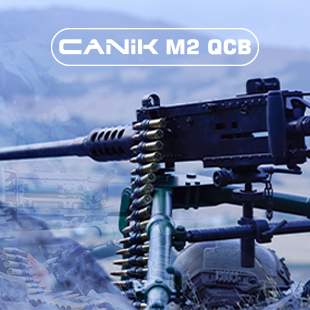
• TRAKON Targan : Weapon station armed with a 12.7 mm CANiK M2 QCB heavy machine gun.
• TRAKON 30 : Weapon station armed with a 30x113 mm cannon.
• TRAKON Lite : Weapon station armed with a 5.56 mm or 7,62 mm machine gun or 12,7 mm heavy machine gun.
• TRAKON Crew
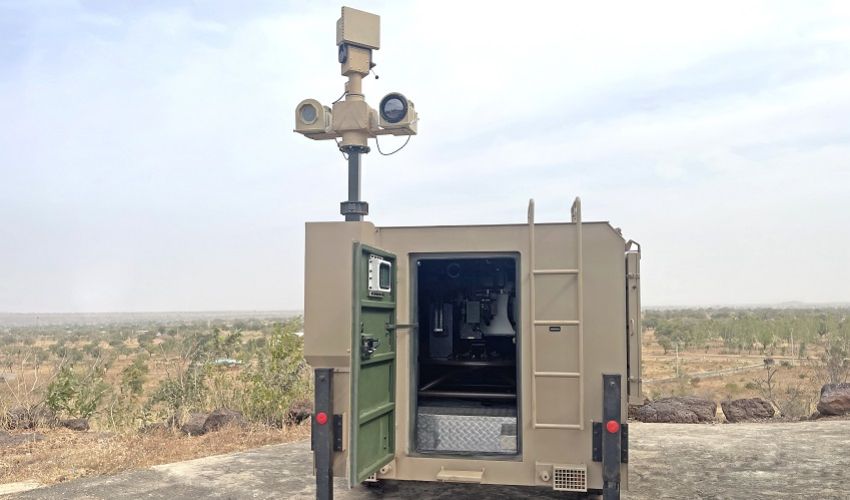
UNIROBOTICS is continuing the development of TRAKON-series weapon stations for both manned and unmanned systems, along with developing solutions aimed at naval usage of these systems. In addition, the TRAKON Lite turret armed with 12.7 mm CANiK M2 QCB is getting ready as a part of UNIDEF’s Modular Weaponized Trailer (MWT) for field tests, in a hot and humid tropical climate region, following the demand of a foreign customer.
UNIROBOTICS contributes to Digital Troops Concept along with HAVELSAN, and its TRAKON weapon stations can be used as a part of unmanned ground vehicles (UGV). HAVELSAN’s lightweight class UGV, BARKAN, is armed with TRAKON Lite, while its mediumweight cousin KAPGAN is armed with TRAKON 30.
TARGAN Prepares for Factory Acceptance Ceremony
UNIROBOTICS is planning to hold a factory acceptance ceremony for TARGAN in the near future before IDEF 2023 fair is held. After the ceremony, it is planned that The Turkish Naval Forces will commence the testing and acceptance processes for TARGAN.
UNIROBOTICS developed and produced TARGAN remote-controlled stabilized RCWS in line with the contract it signed with HAVELSAN in October 2021, and these turrets will be a part of Offshore Patrol Vessels currently under construction for the Turkish Naval Forces. The company made waves with this turret in a very short period of time, thanks to its indigenous business model, surpassing challenges like open and secret embargoes and disruptions in global supply chains to achieve its success. We have touched on this business model that has created new generation RCWSs, for CANiK News readers.
Remote-controlled stabilized weapon stations have special importance for both naval and land-based platforms. These systems transform a machine gun or a cannon into a weapon with high accuracy, powered by an intelligence that utilizes communication and informatics capabilities as well as electro-optical sensors. As such, developing a modern weapon station is a multidisciplinary effort, requiring multilayered efforts in each discipline.
UNIROBOTICS set sail to develop an RCWS to be used in offshore patrol vessels, starting on the hardest path regarding RCWS development, as products for naval platforms need to be operated fully in harmony with the rest of the vessel, as well as requiring special corrosion resistance. In addition, mastery of hardware components like advanced electro-optical sensors for the harmonious operation with the vessel’s combat management and data distribution systems, as well as software components like interfaces for ease of use and algorithms to make the operator’s workflow easier is required. Furthermore, for mechanical design, many criteria must be considered, like radar reflection and infrared signature beyond just the environmental conditions.
Commercial Viability Starts with Full Comprehension of the Technology for UNIROBOTICS
UNIROBOTICS, as a Samsun Yurt Savunma (SYS) subsidiary, started its journey in Türkiye, a country that faces open and secret embargoes as well as the effects of the global pandemic in international trade, took a different and cautious approach so that it could offer the best possible product to HAVELSAN. The company chose to start working with a long analysis and preparation process in the project signed with HAVELSAN to develop the RCWS named TARGAN. UNIROBOTICS wanted to develop all the required technologies in-house during this process and made significant investments in both human capital and infrastructure. The company created expert teams for all the subsystems used in the weapon station.
Expert teams established in fields like mechanical design and production, electronic components to manage and control said mechanic systems, especially motors and controllers, electro-optical systems, printed circuit board designs to ensure smooth operation of all these systems, software to execute in all aforementioned embedded hardware, and all others had to work in parallel. UNIROBOTICS quickly expanded its core team and was able to quickly adapt its growing team to various projects, thanks to its engineering expertise and past work.
The company also started efforts to cooperate with other actors in the Turkish defense and aerospace ecosystem for the sub-systems and components it would require for the design and production processes of TARGAN. Thanks to its collaborators, who are experts in their fields with many projects under their belt, UNIROBOTICS has established an ecosystem that includes many companies that have internalized military standards in various fields, from connectors to wiring, from motors to drivers, from mechanical materials and raw materials to electronic PCB layouts.
UNIROBOTICS Takes a Redundant Progress Approach, From R&D Phase Onwards
After the initial preparation process that established the required infrastructure and brought the required colleagues, UNIROBOTICS took a multi-alternative, safe R&D approach that took a bit more time rather than sprinting to the prototyping phase as fast as possible. The company chose to develop multiple systems for the same niche, for both its designs and the services and products procured from its subcontractors.
This approach was chosen because of the embargoes on Türkiye, the disruptions to the global supply chain, and chip shortages. Even though this approach prolonged the time required for the internal functional tests and certain verification processes, it was proven to be the correct approach over time.
UNIROBOTICS made its procurement and stock management a part of this costly but reliable process. The company did not back down from risks for the procurement of all the components and subsystems it had the potential to use and ordered high amounts of products from different brands and different suppliers.
Ömür Baç, Founding Partner and General Manager of UNIROBOTICS have shared the following on this decision, starting from the R&D phase and onwards: “The procurement management in the defense and aerospace sector is currently critical. When we visit a company that we work with, to produce electronic boards, we bring all the subcomponents of the board with us as well. We give them the designs and the components, and we tell them that they should only produce the PCBs. As there is currently a waiting time for a component of around 1.5-2 years, we see that we have taken the correct approach, despite the increased costs and the risks we took.”
UNIROBOTICS’ Approach Creates Many Products from One Project
TARGAN weapon station is being developed with cutting-edge technologies, to meet the most advanced requirements, as they will be used in Offshore Patrol Vessels for close defense. The qualification process for the weapon station continues as well. The approach UNIROBOTICS took for the development process of TARGAN streamlines the process of creating new derivative products with minimal investment, offering cost advantages for potential customers who require turrets with lesser specifications.
UNIROBOTICS succeeded in creating a turret family in a short period of time, making waves. The remote-controlled stabilized weapon stations the company is developing are listed as follows:
• TRAKON Targan : Weapon station armed with a 12.7 mm CANiK M2 QCB heavy machine gun.
• TRAKON 30 : Weapon station armed with a 30x113 mm cannon.
• TRAKON Lite : Weapon station armed with a 5.56 mm or 7,62 mm machine gun or 12,7 mm heavy machine gun.
• TRAKON Crew
UNIROBOTICS is continuing the development of TRAKON-series weapon stations for both manned and unmanned systems, along with developing solutions aimed at naval usage of these systems. In addition, the TRAKON Lite turret armed with 12.7 mm CANiK M2 QCB is getting ready as a part of UNIDEF’s Modular Weaponized Trailer (MWT) for field tests, in a hot and humid tropical climate region, following the demand of a foreign customer.
UNIROBOTICS contributes to Digital Troops Concept along with HAVELSAN, and its TRAKON weapon stations can be used as a part of unmanned ground vehicles (UGV). HAVELSAN’s lightweight class UGV, BARKAN, is armed with TRAKON Lite, while its mediumweight cousin KAPGAN is armed with TRAKON 30.
TARGAN Prepares for Factory Acceptance Ceremony
UNIROBOTICS is planning to hold a factory acceptance ceremony for TARGAN in the near future before IDEF 2023 fair is held. After the ceremony, it is planned that The Turkish Naval Forces will commence the testing and acceptance processes for TARGAN.