An Important Tool for Arming Rotary and Fixed-Wing Aircraft: Gun Pods


W eapon pods developed for the purpose of enabling fixed-wing aircraft to carry machine guns and automatic cannons that they do not carry internally

Weapon pods developed for the purpose of enabling fixed-wing aircraft to carry machine guns and automatic cannons that they do not carry internally - by attaching them to the fuselages or wings and thus increasing their offensive abilities to the highest level allowed by their designs when needed, began to be used on aircrafts in the World War II. But the fast jet planes and the evolving guided missile/bombs in the years following the end of the War caused machine guns to be considered insufficient and unnecessary for arming fixedwing aircrafts. However, with the development of helicopters and, in parallel, the concept of air assault operations, machine guns and machine gun pods resurged as important weapons and equipment in arming these new rotary-wing aircraft. In fact, the XM-18 pod developed to carry the mighty 7.62 mm M-134 minigun with rotating barrel and high rate of fire under the wings of the new AH-1 G ‘Snake’, which have been taken into the inventory to perform ‘gunship’ missions since 1967 (instead of UH-1s), had become the most widely used weapon pod during this period.
When the Vietcong and North Vietnamese Army (NVA) chose to fight close enough to ‘grab the enemy by their belts’ during an engagement to prevent the United States armed forces from using superior direct and indirect fire support as far as possible, this has caused gunship helicopters’ pilots to prefer machine guns to their 2.75-inch missiles in conducting direct fire support missions. Since the contact was mostly on land, under a dense jungle cover, at a distance of less than 100 meters, and for the safe use of unguided missiles a distance of 200 m was sought between the target and friendly troops, machine guns were considered the safest weapon to suppress the target.1 However, in cases where a low profile and highly maneuverable gunship such as the AH-1 G is not available, in order to be less exposed to the effective anti-aircraft fire from the Vietcong and NVA, especially with DShK HMGs, and to better pierce the dense jungle vegetation, the UH-1 gunships were also equipped with the XM-14 pod carrying the 12.7 mm M2 or M3.
The XM-14 pod, better known for its use on pistonengined fixed wing aircraft providing close air support rather than its use in helicopters, has continued to be widely used in helicopters and close air support aircraft after the Vietnam War due to the features of the M2/M3 machine gun and ammunition they fire and it is still being used today.
In a similar vein, the pilots of the 160th SOAR within the United States SOCOM have given priority to heavy machine guns and automatic cannons for the armament of the helicopter when they created the DAP (Direct Action Penetrator/ Defensive Armed Penetrato) model of the Blackhawk MH-60L in 1989. 3 Undoubtedly, they based their approach on the experience from the Vietnam War, in determining that one of the most suitable weapons for providing direct fire support to special forces operators, who will come into close contact with the enemy forces, is a medium caliber cannon and large caliber machine guns, with high accuracy and more limited destructive effects, thus lowering the risk of accidental loss/friendly fire.
It seems that this approach is still valid in the first quarter of the 21st century as well. Despite the spread of a wide variety of precision-guided/intelligent ammunition, gradually shrinking in size and thus reducing the risk of collateral damage, it is seen that the weapon pods carrying the 12.7 mm machine guns, which constitute the most ideal caliber for arming general-purpose helicopters or special-type aircraft (Light Attack Aircraft) to provide close air support to special forces in counter-insurgency style operations (COIN) around the world, continue to be preferred.
As international practices demonstrate, thanks to rate of fire, accuracy, range and terminal ballistics of ammunition, 12.7 mm M2/M3 machine guns are accepted as an effective weapon against soft skinned or light armored vehicles and infantry (both dug in or in the open). This weapon has been considered as indispensable as light guided munitions in arming general purpose and reconnaissance/light attack helicopters which are to be used in sensitive engagements.
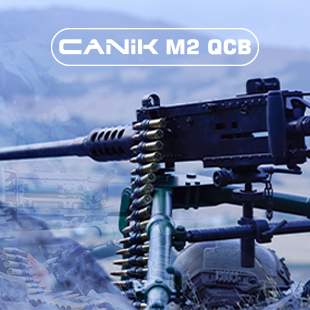
With its features, the Bombus gun pod, developed by Unidef to carry the Canik M2/M3 seems to have emerged as an attractive alternative to this basic weapon system on a market, where despite a large worldwide demand there is only a very limited number of provider.
When the Vietcong and North Vietnamese Army (NVA) chose to fight close enough to ‘grab the enemy by their belts’ during an engagement to prevent the United States armed forces from using superior direct and indirect fire support as far as possible, this has caused gunship helicopters’ pilots to prefer machine guns to their 2.75-inch missiles in conducting direct fire support missions. Since the contact was mostly on land, under a dense jungle cover, at a distance of less than 100 meters, and for the safe use of unguided missiles a distance of 200 m was sought between the target and friendly troops, machine guns were considered the safest weapon to suppress the target.1 However, in cases where a low profile and highly maneuverable gunship such as the AH-1 G is not available, in order to be less exposed to the effective anti-aircraft fire from the Vietcong and NVA, especially with DShK HMGs, and to better pierce the dense jungle vegetation, the UH-1 gunships were also equipped with the XM-14 pod carrying the 12.7 mm M2 or M3.
The XM-14 pod, better known for its use on pistonengined fixed wing aircraft providing close air support rather than its use in helicopters, has continued to be widely used in helicopters and close air support aircraft after the Vietnam War due to the features of the M2/M3 machine gun and ammunition they fire and it is still being used today.
In a similar vein, the pilots of the 160th SOAR within the United States SOCOM have given priority to heavy machine guns and automatic cannons for the armament of the helicopter when they created the DAP (Direct Action Penetrator/ Defensive Armed Penetrato) model of the Blackhawk MH-60L in 1989. 3 Undoubtedly, they based their approach on the experience from the Vietnam War, in determining that one of the most suitable weapons for providing direct fire support to special forces operators, who will come into close contact with the enemy forces, is a medium caliber cannon and large caliber machine guns, with high accuracy and more limited destructive effects, thus lowering the risk of accidental loss/friendly fire.
It seems that this approach is still valid in the first quarter of the 21st century as well. Despite the spread of a wide variety of precision-guided/intelligent ammunition, gradually shrinking in size and thus reducing the risk of collateral damage, it is seen that the weapon pods carrying the 12.7 mm machine guns, which constitute the most ideal caliber for arming general-purpose helicopters or special-type aircraft (Light Attack Aircraft) to provide close air support to special forces in counter-insurgency style operations (COIN) around the world, continue to be preferred.
As international practices demonstrate, thanks to rate of fire, accuracy, range and terminal ballistics of ammunition, 12.7 mm M2/M3 machine guns are accepted as an effective weapon against soft skinned or light armored vehicles and infantry (both dug in or in the open). This weapon has been considered as indispensable as light guided munitions in arming general purpose and reconnaissance/light attack helicopters which are to be used in sensitive engagements.
With its features, the Bombus gun pod, developed by Unidef to carry the Canik M2/M3 seems to have emerged as an attractive alternative to this basic weapon system on a market, where despite a large worldwide demand there is only a very limited number of provider.