Closing the Odesa Gap: Air Defence and C-UAS with USVs


Assoc. Prof. Dr. Bleda KURTDARCAN evaluates the next-generation air defence concept achieved through unmanned surface vessels (USVs) and the critical role of Canik companies in this new architecture in his latest article.
Closing the Odesa Gap: Air Defence and C-UAS with USVs
The destruction of an inbound strike drone by a small quadcopter launched from an unmanned surface vessel (USV) in the Black Sea has marked the beginning of a new era in naval warfare. Developed to close the geographical vulnerability off the coast of Odesa, this concept offers a highly persuasive and cost-effective alternative to conventional surface-to-air missiles.
Here are the key highlights from this strategic article authored by Assoc. Prof. Dr. Bleda KURTDARCAN:
-
An Anti-Drone Curtain at Sea: The unprecedented successes achieved by Ukraine's Magura and Sea Wolf class USVs against aerial targets form the foundation of a next-generation, crewless defence line drawn across maritime approaches.
-
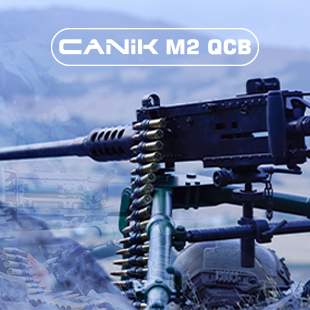
The Interceptor Role of Canik Companies: Following integration efforts in March and April 2026, TRAKON LITE RCWSs equipped with Canik M2 QCB heavy machine guns are taking their place on Dolpin USVs to protect coastlines against Shahed-type one-way attack drones.
-
Global USV Integrations: The lessons learned in the Black Sea are expanding globally as the threat of one-way attack drones over water grows. For instance, the 12-metre ARW39CAT-A catamaran developed by the Spanish firm Armmo selected the 30x113 mm TRAKON 30 RCWS—manufactured by Canik and UNIROBOTICS—as its secondary weapon for low-altitude air and drone defence.
This innovative approach demonstrates that pushing cheap interceptors out to sea on uncrewed boats will inevitably expand far beyond its current scope.
Discover the full article and the changing dynamics of coastal defence by reading the 16th issue of Canik NEWS here: Click here to read.